
A fragrance can look convincing in a product photo and still disappoint the moment it reaches your vanity. Counterfeit perfumes often imitate a familiar bottle, a recognizable logo, and even a popular scent profile. What they rarely reproduce is the complete experience: the precision of the packaging, the quality of the atomizer, the development of the scent, and the confidence that comes with an original perfume.
Knowing how to spot fake perfumes protects more than your purchase. It helps you avoid diluted formulas, harsh materials, poor-performing sprays, and products that may not have been made or stored safely. Whether you are buying a designer signature, a rich oud, or a gift-ready fragrance set, use several checks together rather than relying on one detail alone.
How to Spot Fake Perfumes Before Opening the Box
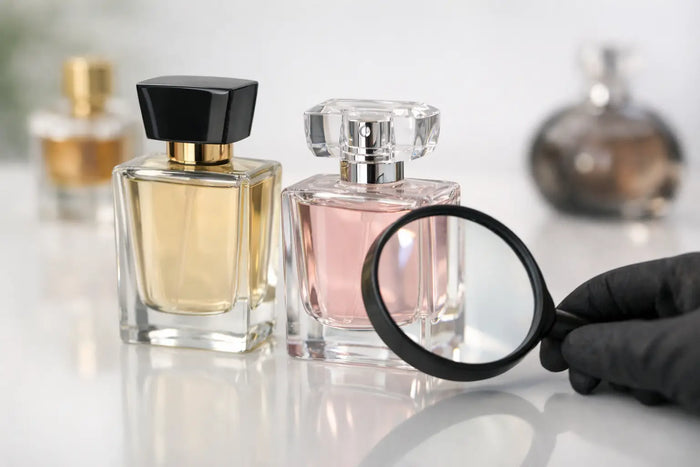
The first clues are usually visible before the perfume is sprayed. Authentic fragrance houses invest heavily in presentation because the box, bottle, cap, label, and formula are designed as one finished product. A counterfeit may copy the general appearance but miss the fine details.
Start with the outer cellophane. It should be neatly fitted, clear, and professionally sealed, with clean folds and no excess glue. Some brands use different wrapping methods depending on the product, region, or production year, so imperfect cellophane is not proof by itself. It is simply a reason to inspect more closely.
Next, look at the box printing in strong light. Original packaging typically has crisp lettering, consistent spacing, saturated color, and clean metallic accents where applicable. Be cautious if the brand name looks slightly blurred, the logo proportions feel off, or the text contains spelling errors. Small type on the ingredients panel and base label should also be sharp and readable, not fuzzy or uneven.
The cardboard matters, too. Premium perfume boxes generally feel sturdy and precisely cut. Thin, soft cardboard, loose internal supports, or an insert that does not hold the bottle securely can point to poor manufacturing. That said, travel formats and some value-focused lines may use simpler packaging, so compare the product with official brand imagery and the expected presentation for that exact size.
Check the Batch Code, but Do Not Treat It as Final Proof
Most original perfumes carry a batch code on both the box and the bottle. It may be laser-etched, ink-printed, or embossed, depending on the house. The code should look intentional and should normally match across the package and bottle.
A missing code, a label placed over the code, or a code that rubs away easily is a clear warning sign. Still, batch codes are not a guarantee of authenticity. Counterfeiters can copy real codes, and legitimate brands occasionally change their coding style. Use the code as one part of a wider assessment, especially when the price or seller already gives you pause.
Inspect the Bottle Like a Collector Would
A genuine perfume bottle feels considered in the hand. The glass is usually smooth and balanced, with even thickness and clean edges. Look for air bubbles, rough seams, crooked labels, uneven paint, or cloudy glass. On a luxury bottle, these details are rarely accidental.
Pay attention to the cap. It should sit securely and align properly with the bottle. Many premium caps have a reassuring weight, magnetic closure, or a distinctly engineered fit, though this varies from brand to brand. A loose cap or a cap that looks too light can be suspicious, but it is not conclusive for every fragrance.
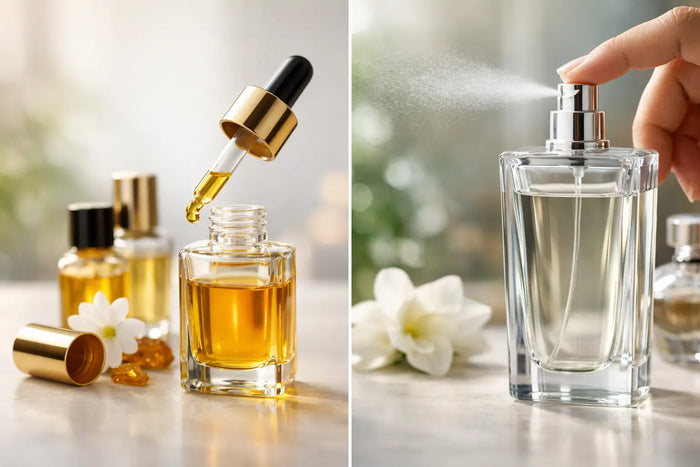
The atomizer is another useful test. Original perfumes generally produce a fine, even mist. A counterfeit bottle may sputter, leak, spray in a narrow stream, or require excessive pressure. Check the collar around the sprayer as well. It should be firmly attached, with no visible glue, gaps, or sharp metal edges.
Finally, examine the liquid. The color should be consistent, with no floating particles or unusual cloudiness. Some natural materials and aged fragrances can show subtle variation, particularly in complex oud, amber, and oil-based compositions. What should concern you is obvious sediment, a dramatically different color from the expected product, or liquid that appears contaminated.
Let the Scent Tell You More Than the First Spray
A fake perfume can sometimes imitate the opening notes because those are the easiest part of a fragrance to recognize. The real difference often appears after the first few minutes. Original fragrances are built in layers: top notes create the introduction, heart notes give the scent its character, and base notes provide depth and lasting presence.
Spray the fragrance on skin or a scent strip and give it time. If it smells aggressively alcoholic for several minutes, remains flat, or shifts quickly into a harsh synthetic note, it may not be genuine. A poorly made imitation can feel loud at first and disappear unexpectedly soon after.
Longevity alone is not a perfect authenticity test. Fresh citrus scents, airy florals, and lighter eau de toilettes naturally wear closer to the skin than extrait de parfum, attar, or concentrated perfume oils. Skin type, climate, application, and storage all affect performance. Instead of asking only whether it lasts all day, consider whether the fragrance develops in a believable way and leaves a refined trail consistent with its concentration and scent family.
For example, an original woody oriental may move from bright spice into warm resins, musk, or creamy woods. A quality Arabic fragrance may reveal saffron, rose, incense, amber, or oud in stages rather than as one sharp, unchanging accord. That evolution is difficult to reproduce well.
Price Can Be a Signal, Not a Shortcut
A promotion does not mean a perfume is fake. Reputable retailers run seasonal offers, bundle pricing, clearance events, and limited-time discounts. But an unusually low price on a fragrance that is rarely discounted should make you slow down.
Compare the offer to the typical price for the same concentration and volume. A 100 ml eau de parfum should not be confused with a 50 ml bottle, a tester, a refill, or a fragrance oil. Product listings should clearly state the name, size, format, and condition. Vague descriptions such as “inspired,” “type,” or “equivalent” are not necessarily dishonest, but they are not the same as an original branded perfume.
Be particularly careful with listings that use stock photos only, avoid showing the bottom label, or make extravagant claims about “factory originals” without clear product information. Authenticity should be supported by transparent retail practices, not by dramatic promises.
Buy From a Retailer That Makes Authenticity Easy to Verify
The most reliable way to avoid counterfeit fragrance is to choose a retailer with a clear catalog, recognizable brand selection, complete product details, and accountable customer service. Look for exact volume, fragrance concentration, product imagery, and straightforward policies. A serious fragrance retailer understands that customers want to compare designer favorites, niche scents, oud blends, perfume oils, and gift options with confidence.
Keep your order confirmation and packaging until you have checked the bottle. If something feels wrong, photograph the box, batch code, bottle base, and sprayer before using the product further. This gives the retailer a clear record to review and helps distinguish a possible manufacturing issue from a concern about authenticity.
For fragrance lovers, the best purchase is not simply the lowest-priced bottle. It is the one that arrives with the polished presentation, true composition, and lasting character the perfumer intended. Shop thoughtfully, trust the details, and let your next signature scent earn its place in your collection.